
Can cannabis help back pain?
Medical cannabis may help manage chronic or acute back pain by reducing inflammation and modulating pain signals in the nervous system. Patients often report improved mobility and quality of life when it is used as part of a carefully monitored treatment plan.
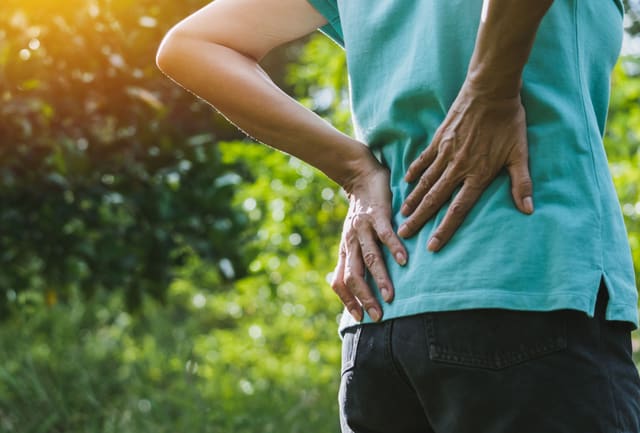
Back pain is one of those things that can completely take over your life. Whether it's a dull ache that won't shift or a sharp pain that stops you in your tracks, it can affect how you move, sleep, work and even relax. If you've tried different treatments without much success, you might be wondering whether medical cannabis could help.
It's a question more and more people are asking, and for good reason. Cannabis has been used for pain relief for centuries, and now that it's legally available through prescription in the UK, patients are exploring whether it could offer relief for a range of different conditions where other options haven't worked.
In this guide, we look at what causes back pain, how it's usually treated, and whether medical cannabis - professionally prescribed through Medicann - might be a good option for you.
What causes back pain?
Back pain is incredibly common. In fact, according to NHS patient data, about 8 out of 10 people in the UK will experience back pain at some point in their lives. The causes vary widely, from something as simple as poor posture or lifting something heavy, to more complex issues like herniated discs, arthritis or nerve compression.
Sometimes back pain comes on suddenly after an injury or awkward movement. Other times, it develops gradually over months or years, often linked to repetitive strain, ageing or underlying health conditions. For some people, the cause is clear. For others, it's harder to pinpoint exactly what's going on.
What matters most is understanding whether your pain is acute or chronic, because that tends to influence how it's treated.
How to relieve acute back pain
Acute back pain is pain that comes on suddenly and usually lasts for a few days to a few weeks. It's often caused by muscle strain, a sudden movement, or lifting something incorrectly.
The good news is that most acute back pain improves on its own with time and rest. Common treatments include over-the-counter painkillers like paracetamol and anti-inflammatories like ibuprofen, applying heat or ice packs, and gentle movement when you're able. Staying active - even just light stretching or walking - often helps more than staying completely still.
If the pain is severe or doesn't improve after a few weeks, it's worth seeing a doctor to rule out anything more serious. Physiotherapy, massage or exercises tailored to your back might also be recommended.
How to relieve chronic back pain
Chronic back pain is different. It's pain that lasts for three months or longer, and it can be much harder to manage. The underlying causes might be more complex, such as degenerative disc disease, spinal stenosis, arthritis or long-term nerve damage.
Treatment for chronic back pain often involves a combination of approaches. This might include prescription painkillers, physiotherapy, exercise programmes, cognitive behavioural therapy, or in some cases, injections or surgery. For many people, the goal isn't to eliminate the pain completely, but to manage it well enough to get on with daily life.
This is where plant-to-patient medical cannabis is starting to play a role for some patients. When traditional treatments haven't provided enough relief, cannabis-based medicines may be considered as part of a broader pain management plan.
Does cannabis help back pain?
There's growing evidence that cannabis may help with certain types of pain, particularly chronic pain that hasn't responded well to other treatments. THC and CBD, the two main compounds in cannabis, interact with the body's endocannabinoid system, which is involved in regulating pain signals, inflammation and mood.
Some patients report that medical cannabis helps reduce the intensity of their pain, improves their sleep, and allows them to move more comfortably. It doesn't work for everyone, and it's not a cure, but for some people it offers meaningful relief.
At Medicann, the decision to prescribe medical cannabis for back pain is made on a case-by-case basis. During your consultation, one of our approved doctors will review your medical history, the treatments you've already tried, and the nature of your pain. If they believe cannabis-based medicine could help, they'll create a prescription tailored to your needs.
What is sciatica?
Sciatica is a specific type of back pain that involves the sciatic nerve, which runs from your lower back down through your hips, buttocks and legs. When this nerve becomes compressed or irritated - often due to a herniated disc, bone spur or spinal stenosis - it can cause sharp, shooting pain that radiates down one side of the body.
The pain can range from mild to severe, and it's often accompanied by tingling, numbness or weakness in the leg or foot. For some people, sciatica resolves on its own within a few weeks. For others, it becomes a long-term issue that significantly affects quality of life.
How to treat sciatica
Treatment for sciatica depends on the severity and underlying cause. Mild cases often improve with rest, gentle stretching, heat or ice packs, and over-the-counter pain relief. Physiotherapy can also be very effective, helping to strengthen the muscles around the spine and relieve pressure on the nerve.
If the pain is more severe or persistent, doctors might recommend stronger painkillers, anti-inflammatory medications, or corticosteroid injections to reduce inflammation around the nerve. In rare cases where the pain is caused by a structural problem that isn't improving, surgery may be considered.
Like other types of chronic pain, sciatica can be frustrating to manage, especially when standard treatments only provide partial relief.
Does cannabis help sciatica?
Because sciatica involves nerve pain and inflammation, some patients find that medical cannabis offers benefits. THC may help reduce pain perception, while CBD is thought to have anti-inflammatory properties that could ease pressure on the affected nerve.
There's still more research needed to fully understand how effective cannabis is for sciatica specifically, but early studies suggest it may be helpful for some people, particularly those dealing with chronic nerve pain. For example, according to a study published in Neurology(the official journal of the American Academy of Neurology), a randomised, double‑blind, placebo‑controlled trial found that THC significantly reduced chronic radicular (the type of nerve pain seen in sciatica) neuropathic pain compared with placebo, with pain relief linked to changes in pain‑processing brain connectivity.
So, if you're living with sciatica and haven't found enough relief through conventional treatments, it may be worth discussing medical cannabis with a specialist. At Medicann, our service is quick and straightforward. Our simple consultation process allows you to talk openly about your symptoms, your treatment history, and whether cannabis-based medicine might be appropriate for your situation.
An approved doctor will assess your individual case and, if suitable, arrange a legal prescription through approved medical channels. Follow-up appointments are also part of the process, so you're supported throughout your treatment and can adjust your prescription if needed.
How we can help…
Back pain - whether it's general lower back pain or sciatica - can be isolating and exhausting. Finding the right treatment often takes time, patience and sometimes a willingness to try something different. Medical cannabis won't be the answer for everyone, but for some patients, it's made a real difference.
If you're curious about whether it could help you, the first step is simple. Check your eligibility online through Medicann, and if appropriate, book a consultation with one of our GMC-registered specialists.
Get in touch today to find out more.
Related articles
Can Medicinal Cannabis Help You Sleep?
Read more →
Medical Cannabis Consumption Methods Explained: Oils, Vapes, Flower and Pastilles
Read more →
How to Look After Your Medicinal Cannabis Vaporiser This Summer
Read more →
What's the Difference Between Irradiated vs Non-Irradiated Medical Cannabis?
Read more →
Travelling abroad with medical cannabis: what you need to know
Read more →
Medical cannabis in Jersey: how to access treatment
Read more →